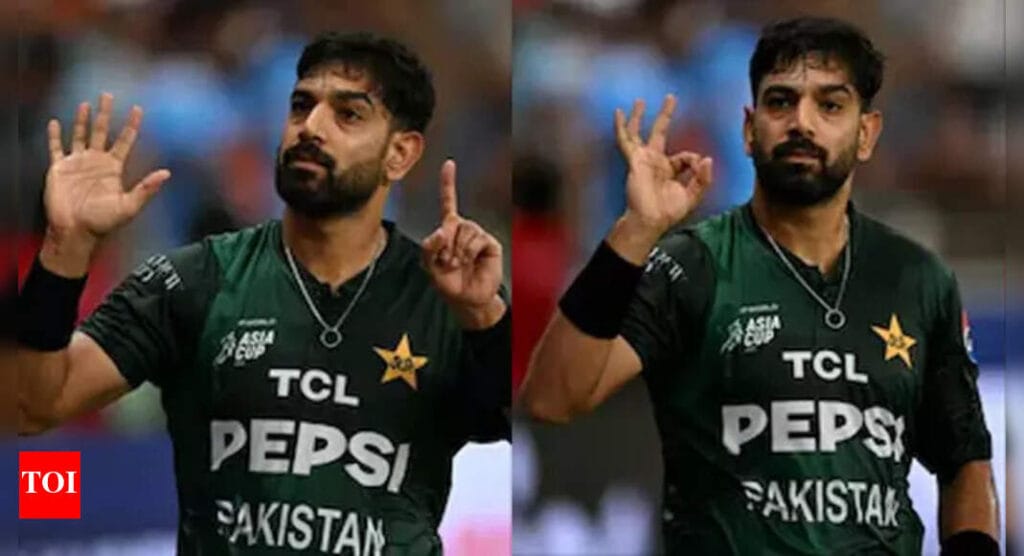
Haris Rauf Sparks Outrage with ‘6-0’ Gesture Towards Indian Fans During India vs Pakistan Asia Cup Clash – Watch | Cricket News
Haris Rauf, the Pakistani fast bowler, ignited a firestorm of controversy during the recent Asia Cup clash between India and Pakistan. With tensions already high due to the fierce rivalry between the two cricketing nations, Rauf’s seemingly innocuous gesture of signaling ‘6-0’ towards Indian fans raised eyebrows and provoked strong reactions on social media.
The match, held at the iconic stadium, was watched by millions. Rauf, known for his fiery bowling and impactful performances, found himself at the center of attention not only for his skills but also for his provocative gesture. After dismissing a key Indian batsman, he turned to fans with a ‘6-0’ sign, pointing at the scoreboard indicating Pakistan’s dominance over India in terms of victories in the Asia Cup. This display didn’t sit well with many cricket fans, causing a wave of criticism and outcry.
Rauf’s Gesture and Its Reception
Critics quickly took to social media, expressing outrage over Rauf’s actions. Many fans viewed the gesture as disrespectful, arguing that it added fuel to an already heated rivalry. Some claimed that athletes should maintain a degree of sportsmanship, even in intensely competitive environments. On the other hand, some supporters defended Rauf, asserting that he was merely celebrating a moment of victory and pride for his team.
Rauf’s relatively quick rise to prominence in international cricket has made him a polarizing figure. He has seen success at various levels and has become a crucial player for Pakistan. While some argue his gesture carries a spirit of camaraderie, others feel it crossed a line, particularly in an emotionally charged atmosphere.
| Bio Data and Personal Information | |
|---|---|
| Name | Haris Rauf |
| Date of Birth | October 7, 1993 |
| Nationality | Pakistani |
| Height | 6 feet 0 inches (183 cm) |
| Role | Fast Bowler |
| Domestic Team | Lahore Qalandars |
| International Debut | 2020 |
| Total Wickets (as of 2023) | Over 50 in ODIs |
| Link to Reference |
Background on Haris Rauf
Born in Lahore, Pakistan, Haris Rauf faced challenges on his journey to professional cricket. He started playing cricket on the streets, on unpaved fields, before gaining recognition in local tournaments. His breakthrough came during the 2019 Pakistan Super League (PSL) when he performed exceptionally well for Lahore Qalandars. His raw pace and ability to consistently bowl yorkers quickly caught the attention of selectors.
Rauf’s talent saw him earning opportunities with the national team in T20 matches and later in ODIs. His inclusion in various international fixtures has established him as a key figure for Pakistan. He is often compared to legendary Pakistani bowlers, showcasing similar raw talent and potential.
The Impact of Social Media Reaction
The rapid response from social media highlighted the impact of Rauf’s actions. Critics and supporters alike flooded platforms with their opinions. Many called for more accountability among athletes in how they express their emotions during high-pressure scenarios. Others emphasized that such gestures can escalate rivalries, potentially leading to unsportsmanlike conduct among players and fans.
A few former cricketers also weighed in. They highlighted the responsibilities that players have to their fans, particularly younger enthusiasts who might idolize them. With so much emphasis on sportsmanship, these instances sometimes overshadow the actual game being played.
The Broader Context of India-Pakistan Rivalry
The rivalry between India and Pakistan is one of the most intense in sports history. Every encounter is not just a game; it’s a clash of cultures and histories. The stakes are always high, and emotions run deep. This context makes any on-field action, including gestures, highly scrutinized.
Historically, both nations have had moments of brilliance and controversy on the cricket field, making their games a focal point for fans. Cricket matches are often viewed as a microcosm of the larger socio-political landscape, evoking strong sentiments among players and supporters alike.
The Importance of Sportsmanship
Sportsmanship is a foundational principle in any competitive sport. It encompasses respect for opponents, officials, and the game itself. Athletes who demonstrate poor sportsmanship can tarnish reputations and incite unrest among fans. Such behavior can create a cascading effect, influencing how future generations perceive sports.
While competitiveness is healthy, displaying integrity and respect is equally crucial. Rauf, like many athletes, must find the balance between expressing pride in performance and upholding the values of fair play.
Fan Reactions and Cultural Insights
The cultural implications behind Rauf’s gesture cannot be overlooked. Cricket is more than a sport in both India and Pakistan; it carries emotional weight and represents national pride. Fans often express their identities through their support for teams, making gestures like Rauf’s more significant.
Followers on social media voiced their interpretations of Rauf’s actions, with many relating it to national identity and pride. Some fans noted that gestures like these might rally support behind their teams, while others feared it could perpetuate animosity.
Future Implications for Rauf and Other Athletes
The incident raises questions about future conduct among athletes, especially in high-stakes games. Will Rauf adjust his behavior in light of the backlash? The reactions from this event may serve as a learning experience for him and his peers.
Athletes must weigh the consequences of their actions, especially in such a charged environment. The balance between competitive spirit and sportsmanship remains delicate, and their choices can influence the game, their careers, and even the fans’ perceptions.
Conclusion
Haris Rauf’s ‘6-0’ gesture during the Asia Cup match exemplifies the complexities of sports and emotions. The incident has raised questions about sportsmanship, fan interactions, and cultural identities in the context of one of cricket’s most celebrated rivalries. As the cricketing world continues to evolve, instances like these serve as reminders of the nuanced relationship between players and fans, underscoring the need for respect and understanding in all aspects of the game.